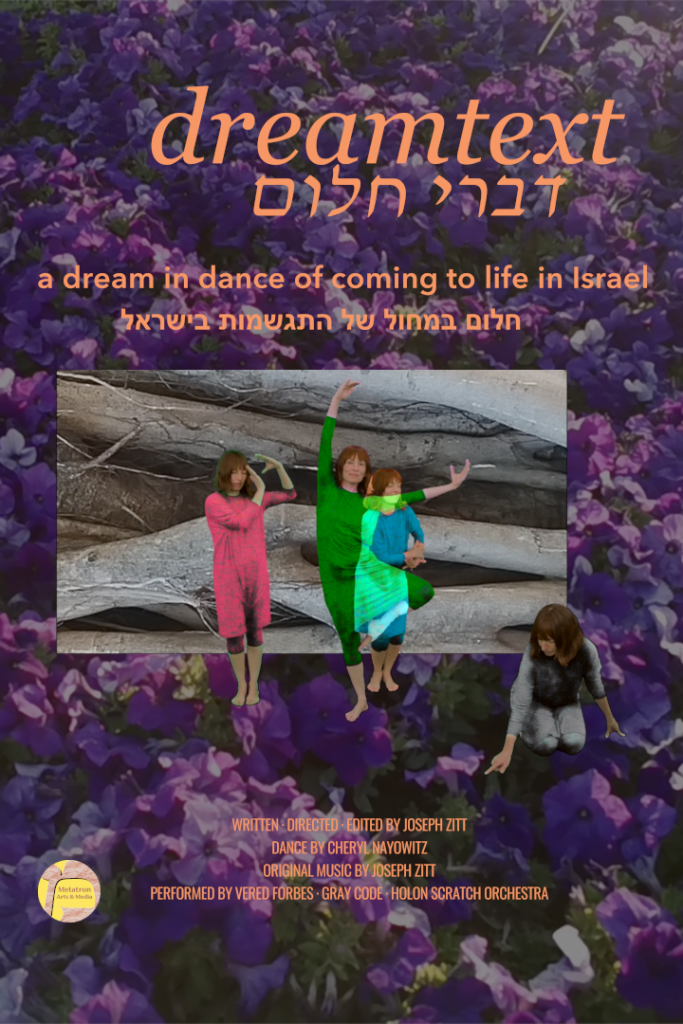
A few thoughts on how you might spend time with the film.
Most films demand your full attention.
They worry that if your mind wanders for even a moment, you’ll lose the thread of the plot, the momentum, the precise sequence of events they’ve worked so hard to control.
They’re designed for a single, very specific way of watching:
you in a chair, facing forward for over an hour, no distractions, immersed in sound that insists you stay exactly where you are.
dreamtext isn’t like that.
It’s a dream.
Ideally, it would be looping quietly in a gallery room.
You could wander in and out, sit for a while, drift away, return later.
There would be no beginning you must catch, no ending you need to stay for.
In the real world, you’ll watch it in on your TV, computer, a tablet, or a phone.
You might be interrupted.
A message may arrive.
Someone may come into the room.
A thought may surface.
It may start to rain outside.
That’s OK.
If your mind drifts, let it drift.
If an image or a sound pulls you inward — or outward — follow it.
There’s no story to lose, no puzzle you must solve, no single “right” way to watch.
If you want to rewind, you can.
If you want to adjust the sound, do.
If you stop and come back later, the film will still be there, waiting for you.
If you watch it all at once or in small pieces, it will meet you where you are.
Watching from beginning to end
While dreamtext is welcome to drift with you, it also carries a quiet structure of its own.
If you choose to watch from beginning to end, the film offers another kind of reward:
the slow evolution of its imagery, and the full arc of the dance — performed almost entirely in a single improvised take.
Let it unfold at the pace of your own attention.
Let it breathe with you.
Let it dream with you.